Showing posts with label tips. Show all posts

Monday, March 4, 2013

Only 75 days to Ontario walleye opener

Lake of the Woods walleye fishing
Nice Lake of the Woods walleye
Each March many people are getting tired of winter and start the countdown to the walleye opening weekend. To many it marks the 'beginning of summer' to some it means having fresh walleye again and to some it means heading up north to their annual Canadian fishing trip.

After being closed for spawning, the walleye season opens up again in Northwest Ontario the 3rd Saturday in May each year. In 2013, that means May 18th is the day many have been dreaming about. While some anglers get fresh walleye by going ice fishing in the winter, those that are unable to make it to Sunset Country in the winter or just prefer to fish in the summer dream of opening day.
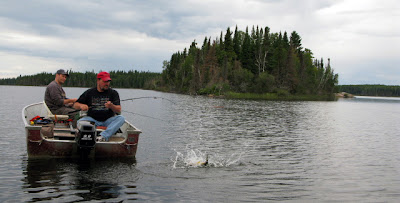
Ontario fly-in walleye fishing
Fly-in fishing at McKusker-Keeper Lakes Camp

You can download the 2013 fishing regulations from the Ministry of Natural Resources website. To fish in Ontario, you'll need an outdoors card as well as a fishing license. The Ministry of Natural Resources is encouraging you to buy your Ontario fishing license online before you head out on your fishing trip. You can purchase either a Sport or Conservation license. The conservation license has lower limits. You can download the Ontario fishing regulations as a whole book or just the zone you will be fishing. Be sure to check the exceptions as certain lakes have special limits and slot sizes.

If you haven't booked your 2013 walleye fishing trip yet, you'd better pick a place quick before they fill up. Check out some of the lodges in Ontario with walleye fishing now.

Let the countdown begin!

Saturday, January 7, 2012

Connect with Ontario's Sunset Country online

Do you need a quick question answered? Want to see inspiring photos of Sunset Country? Need up to date information?

Follow Ontario's Sunset Country on one of our many social media avenues.


Add Sunset Country to your circles on Google+


View inspiring photos of Sunset Country


Read current or past articles on our blog


See more of Sunset Country on Flickr


Watch Sunset Country videos (more to come in the future)


You can also view our main Sunset Country website which links to over 400 Ontario lodges, resorts, hotels, local travel centres, businesses and more. Looking for something specific? Try one of our many product specific websites. Ask questions about traveling to Ontario's Sunset Country via email.


Tuesday, October 11, 2011

Top 5 Tips When Planning a Canadian Hunting Trip

Make sure you are prepared for your hunting trip

When planing a hunting trip to Canada, you should really plan in advance as some of the following tasks will require some time. Whether you are planning, a bear, moose or whitetail deer hunt, not adhering to these rules can put a trip on hold and cost losses of fees. When planning a hunting trip to Canada, here is a list of the top 5 basic things to know:

1) Remember your Passport 
A passport is required to enter Canada by car, sea or air. If you don’t have one, get one as soon as possible. You can apply for your U.S. Passport online at: http://travel.state.gov/passport/forms/ds11/ds11_842.html

Tip: Make two colour copies of your passport before you travel. Carry one each in different luggage or firearms case in case you lose your original. Always carry your original passport with you at all times when you travel internationally.

2) U.S. Customs Form 4457
You will need to have a U.S. Customs form 4457 filled out with a list of items of value as proof you owned them before you entered Canada. It is best to list your firearms, spotting scopes, riflescopes, video cameras, etc. This is usually any item of value that contains a serial number. Failure to obtain a completed U.S. Customs Form 4457 before you leave may end up costing you Duty (tax) at the Canadian Border as you enter back into the United States. The customs agent may think you bought your hunting equipment in Canada and therefore charge you duty. The online form can be accessed at: CBP website. Fill in the form and bring it with you to the border crossing where it will be stamped with the official customs seal. DO NOT SIGN IT until you meet the border crossing officer.

Tip: Make 2 extra copies of your Form 4457 and keep them with your extra passport copies.

Sample Form 4457

3) Canada Non-Resident Firearm Declaration Form 909
Hunters must fill out the Non-Resident Firearm Declaration Form 909 before leaving for Canada. Don’t try to fill it out at the border, as it will delay your trip. Do not sign this form until you are at the border and the officials there ask you to sign it. You will need to present the form with your passport. There is a fee for the permit and it is approximately $25 CDN. You can pay for your permit in Canadian dollars or by MasterCard, Visa or American Express. Canadian Customs does not except U.S. Currency. Remember to always carry your firearms permit and identification while you are hunting. Do not bring any handguns on your trip as handguns are prohibited in Canada. Obtain your firearms application at: http://www.rcmp-grc.gc.ca/cfp-pcaf/form-formulaire/num-nom/909-eng.htm

Tip: Fill out the form online and then print 3 copies. Double check your firearms details, especially the serial number, before you hit the print button.

4) Denied Admission to Canada
Visitors may be denied admission to Canada if you have any of the following convictions on your record:
  • Minor offences (including shoplifting, theft, assault, dangerous driving, unauthorized possession of a firearm, possession of illegal substances, etc.)
  • Indictable Criminal offences (including assault with a deadly weapon, manslaughter, etc.).
  • Driving While Intoxicated (DWI)

Successful Moose Hunt at Thunder Hook Fly-ins

5) Bringing back your Canadian Hunting Trophies
There are 3 different ways to get your coveted hunting trophies back from Canada into the United States:

(1) Bring them back with you by car or airplane
To bring back the raw cape, rug and/or antlers/horns home with you, you will need to fill out U.S. Fish & Wildlife Form 3-177-1. This form appoints you as the owner/broker of the animal parts you will be importing from Canada into the United States. If you use a hunting consultant, they should fill this out for you. If you booked your trip direct with the Outfitter, you will need to fill it out yourself. This form can be a little tricky and will require some research as you will be required to list the common name of the animal you are importing as well as the scientific name. Remember to present your Canadian Hunting License and tags with this form to prove that the trophy was taken legally. You can find the application and instructions at http://www.fws.gov/forms/serachdata.cfm and typing "3-177" into the search field.
Tip: Fill out the U.S. Fish and Wildlife Form 3-177-1 before your hunt.

(2) Have the cape, rug and/or antlers/horns shipped
Bring back your raw trophies by having them shipped to you. Your Canadian outfitter will bring your hunting trophy to a taxidermist. An export permit must be filed in Canada to export the hunting trophies to the United States. The hunting trophy must be shipped to a USDA Port of Entry and received by a US Brokerage Company and inspected by the U.S. Wildlife Department to make sure the contents and the export paperwork match so that the hunting trophy may legally imported into the United States. Once the hunting trophy clears the U.S. Port of entry, it must be shipped to a USDA Certified Taxidermist. This process can take up to 6 months and cost upwards of $750 or more depending on how many trophies you are importing.

(3) Have the trophy taxidermy mounted and shipped back to you
Have your hunting trophy taxidermy mounted in Canada. This entails you to trust the outfitter to choose a taxidermist for you. You will not have to run the taxidermy trophy through process #2, but you will have to pay shipping and customs fees.

Being prepared for your Canadian hunting trip can make all the difference! For more information about hunting in Sunset Country or to connect with other hunters, visit HuntSunsetCountry.com. For more information regarding non-residents having firearms in Canada, visit the Canadian Firearms Program.

Wednesday, July 13, 2011

How to Find Out What Species of Fish Are in a Lake

MNR's New Fish ON-Line Tool
In April 2011, the Ontario Ministry of Natural Resources (MNR) launched an awesome new Fish ON-Line tool. Anglers no longer need to visit Ministry of Natural Resources offices or find an in-the-know local fisherman to gather information about the various fishing opportunities in Northwest Ontario. It provides a lot of information that used to be hard to find. Now information about the various species of fish found in a certain lake, fish stocked in lakes and some information about the lake itself is available at ontario.ca/fishing.

The MNR used a Google map and overlaid provincial fisheries data on top of it. The ministry then gathered on-hand information on about 13,000 lakes and has made all of that available as well. On those lakes, Fish ON-Line will let you see what fish species are available, the regulations for the lake and if there has been any stocking. Some lakes have the maximum and average depths of the lake. For many more bigger,  popular waterways such as Eagle Lake, the depth contour information has been overlaid as well.

For example, take Wabigoon Lake. If you click on the Lake Depth Contours in the left hand column, you can see the contours of Wabigoon Lake. Click the fish icon and you'll see the surface area of the lake is 9922 ha, the maximum depth is 14.6 m, the average depth is 6.1 m and it's in the Fisheries Management Zone 5. Click on the Wabigoon/Dinorwic Lakes Fact Sheet and you'll see specific Wabigoon/Dinorwic Lakes fishing regulations and lake facts. Under the Fish tab you'll see that Wabigoon Lake has Black Crappie, Whitefish, Muskellunge, Northern Pike, Sauger, Smallmouth Bass, Walleye and Yellow Perch.

You can quick link to a popular waterway or search by lake, fish species, stocked water body, GPS Coordinates. Use the Get Directions Tool and you can find your way around quite easily. You can also link to Licence Information, the Fishing Zone Regulations and the Lake Fact Sheet. The ServiceOntario offices are dotted on the map if you are looking to buy a Fishing Licence. You can also type in your location and getting directions to the ServiceOntario.

All in all, it is a pretty impressive fishing information tool.  If you are planning a fishing trip to Ontario, check out the Fish ON-Line website to find out more information on the lake you'll be fishing on. If you are looking for a fishing resort or lodge to stay at in Sunset Country visit www.ontarioresortsandlodges.ca

Friday, December 28, 2007

Basic Travel Tips - Visiting Sunset Country

We thought it would be wise to post some tips for anyone who will be traveling or who may be considering a trip to Ontario's Sunset Country in 2008. First off for our American friends, you are all probably wondering what the scoop is regarding whether or not you need a Passport in 2008. Here's what we know as of the date of this post:

  • Air Travelers: YES - if you arrive from the United States by air you do need a Passport and have needed one since January 2007. Just to clear things up, this is an American Law and you need it to return to the USA not necessarily to come into Canada. However if you want to return home by air after your visit, your Government requires you to have a Passport so make sure you get one if you are flying.
  • Land Travelers: NO - you do not need a Passport in 2008 to travel to Canada and return to the USA by land - i.e. in an automobile or RV. However, you must be able to prove you are a U.S. Citizen (you need a birth certificate or a Passport to prove this) and a valid photo identification - such as a driver's license with your picture on it. Children under 16 are excepted from the photo requirement. Again, this is a U.S. law to return to the USA after visiting Canada - not a Canadian one and since we as Canadians have to ensure that you will be allowed to get back home to the United States after visiting Canada - our Customs officers will ask you to present this level of Identifcation when you cross the border. U.S. citizens who are traveling by land will be required to have Passports to return to the USA in June 2009 - please plan accordingly for this eventuality.
  • For more information about new Passport rules for U.S. citizens returning home after traveling to Canada, visit the U.S. Government's State Department website at this link: http://travel.state.gov/travel/cbpmc/cbpmc_2223.html

U.S. Citizens - What can you Bring?: Canada allows you to bring in a set limit of certain items such as liquor and tobacco duty free. There are also other regulations and restrictions on certain food products, on firearms and other commodities. The best resource to answer these types of questions is the Canada Border Services Agency website under their Frequently Asked Questions page. Here is a link to that page: http://cbsa.gc.ca/help-aide/faq1-eng.html

DWI and DUI: Some U.S. Citizens with DWI (also called DUI) offences may not be allowed into Canada. The decision to let you in is based on Canadian laws as they apply to these offences not American law. Driving while impaired is considered in Canada what Americans would know as a felony conviction - or what we call an indictable offence. Any American who has a DWI or DUI offence is therefore considered to have a criminal record under Canadian laws. The decision to let you into Canada if this situation applies to you is based on how old the offence is and if you have more than one offence of this nature. For more detailed information on this issue as well as info on general admissabilty to Canada you can visit this website: http://geo.international.gc.ca/can-am/minneapolis/home_page/inadmissible-en.asp

Speed Limits: Speed limits in Ontario are posted in kilometers per hour (kmh) as opposed to miles per hour (mph). Here are the approximate equivalents for U.S. travelers:

  • 100 kmh = 62 mph
  • 90 kmh = 55 mph
  • 80 kmh = 50 mph
  • 60 kmh = 36 mph
  • 50 kmh = 30 mph
  • 40 kmh = 25 mph

Currency: Although U.S. currency is accepted just about anywhere, we advise American citizens who will be traveling to Canada to exchange their U.S. dollars for Canadian currency prior to their visit or as soon as you get in to Canada. If you will be exchanging your money in Canada, we strongly recommend you go to a Canadian Chartered Bank, a Credit Union or a Duty Free Shop to make the exchange - this will ensure you get as close to the actual official exchange rate as possible. Credit cards are another option albeit you generally get charged more by the credit card companies than you do at a bank. Recommended cards for travelers are Visa and MasterCard. As of January 2008, the current exchange rate is about par - meaning one U.S. dollar is worth about one dollar Canadian. This can fluctuate however so check before traveling as to what the current offical exchange rate is so you get the most value for your money.

Health Insurance: It is imperative that you check with your health insurer in the United States whether or not your policy covers you and your family while traveling in Canada. In most cases it does not. We strongly advise that you purchase additional travel health insurance prior to crossing the border so that any unexpected medical costs or costs related to emergent care are covered while you are here.

Fishing and Hunting Regulations: The high quality of the fishing and hunting experiences in Ontario are because of our careful fish and wildlife management strategies and regulations. Make sure you inform yourself and everyone in your party as to exactly what the regulations are for both fish and wildlife species - ignorance of these laws will not be accepted as a valid excuse by a MNR Conservation Officer. Some lakes and certain wildlife management units have specific regulations that apply to specific species so if you are unsure what these may be, ask your outfitter or call the Ministry of Natural Resources directly. You can find the current fishing and hunting regulations on the MNR website (and download a copy if you wish) at this address: http://www.mnr.gov.on.ca/MNR/pubs/pubmenu.html

We hope this information is helpful to you but acknowledge we may not have covered everything you wanted to know. If this is the case please call us toll free from the USA at 1-800-665-7567 or email us at info@sunsetcountry.net

Enjoy your stay!